
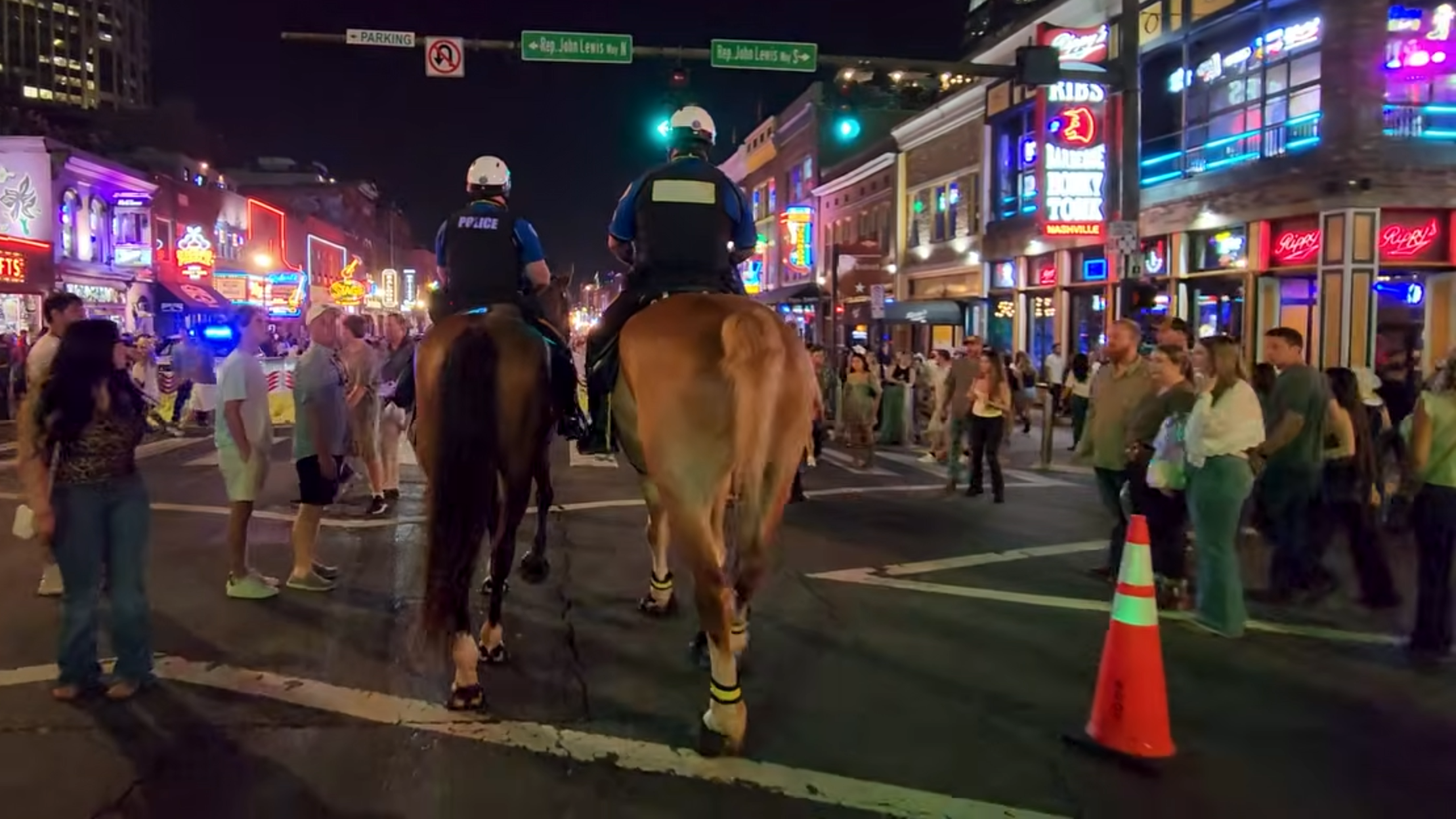
Lower Broadway is generally busy and heavily traveled at night, especially around the core honky-tonk blocks. Crowds, venue staff and visible police presence are part of the environment. None of that guarantees that every person, block or moment is safe.
My practical answer is: many visitors walk Broadway at night, but you should use the same awareness you would bring to any crowded entertainment district. Stay in active areas, keep track of your group, watch traffic, protect your belongings and have a clear plan for getting back.
Conditions can change with the hour, crowd, weather and events. No article can make a personal safety guarantee.
The Core of Broadway Is Usually Full of People
Broadway at night is not usually an empty walk through an unfamiliar downtown. The core blocks can be crowded with visitors entering bars, crossing streets, waiting in lines and moving between nearby venues.
That activity can make the district feel visible and easy to follow. It also creates its own problems. Dense crowds make it easier to lose a friend, miss a curb, step into traffic or become distracted from a phone, wallet or bag.
Busy does not mean risk-free. It means the most likely challenges are often connected to crowds, traffic, alcohol and reduced attention rather than the street being deserted.
Stay Where the Street Is Active
If you are unfamiliar with downtown, keep your route simple and favor well-lit, active streets.
Do not turn down a quiet block merely because an app says it saves two minutes. Do not follow strangers to an unknown location. If something feels wrong, change direction, enter an open business or move toward a more active area.
The article explaining where Lower Broadway starts and ends can help you understand the compact core district and nearby landmarks before you arrive.
Crowds Require More Attention, Not Less
Late-night Broadway mixes pedestrians, delivery activity, police and emergency vehicles, ride pickups and people who may be heavily intoxicated.
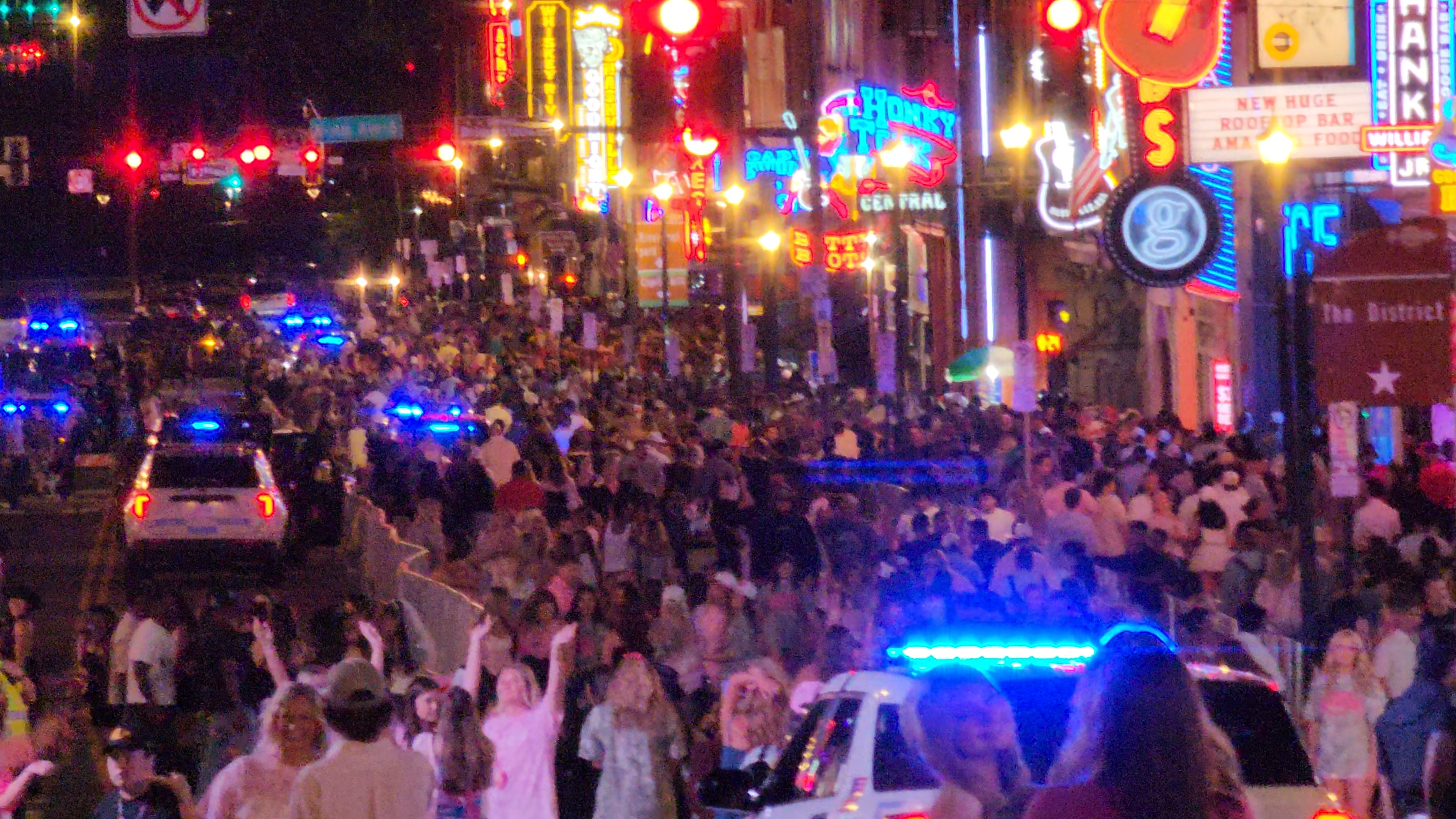
Keep enough awareness to notice what is happening around you. Avoid staring at your phone while walking. Secure valuables. Decide how your group will reconnect if separated. If someone has had too much to drink, do not let that person wander off alone.
The guide to when Broadway gets busy explains how quickly crowd density can change between daytime, early evening and late night.
Take Street Crossings Seriously
The visual chaos can make ordinary street crossings feel less ordinary. Neon, music, crowds and conversations compete for attention while vehicles may still need to move through or around the district.
Use marked crossings. Follow signals and official directions. Look both ways even when other people begin moving. Do not assume a crowd stepping into the street has checked traffic for you.
If a police, emergency or service vehicle is trying to pass, give it room. A closed or controlled street is not permission to stop paying attention.
Visible Police Are Part of the Environment, Not a Guarantee
Visitors may see officers on foot, in vehicles or mounted during busy periods. Their presence reflects the reality of managing a dense entertainment district.
It should not be interpreted as a promise that nothing can happen. You remain responsible for your own decisions, your belongings and the people in your group.
If you need immediate help, contact emergency services or speak directly to an identifiable officer or venue security professional. Current official guidance should take priority over general travel advice.
Alcohol Changes the Risk
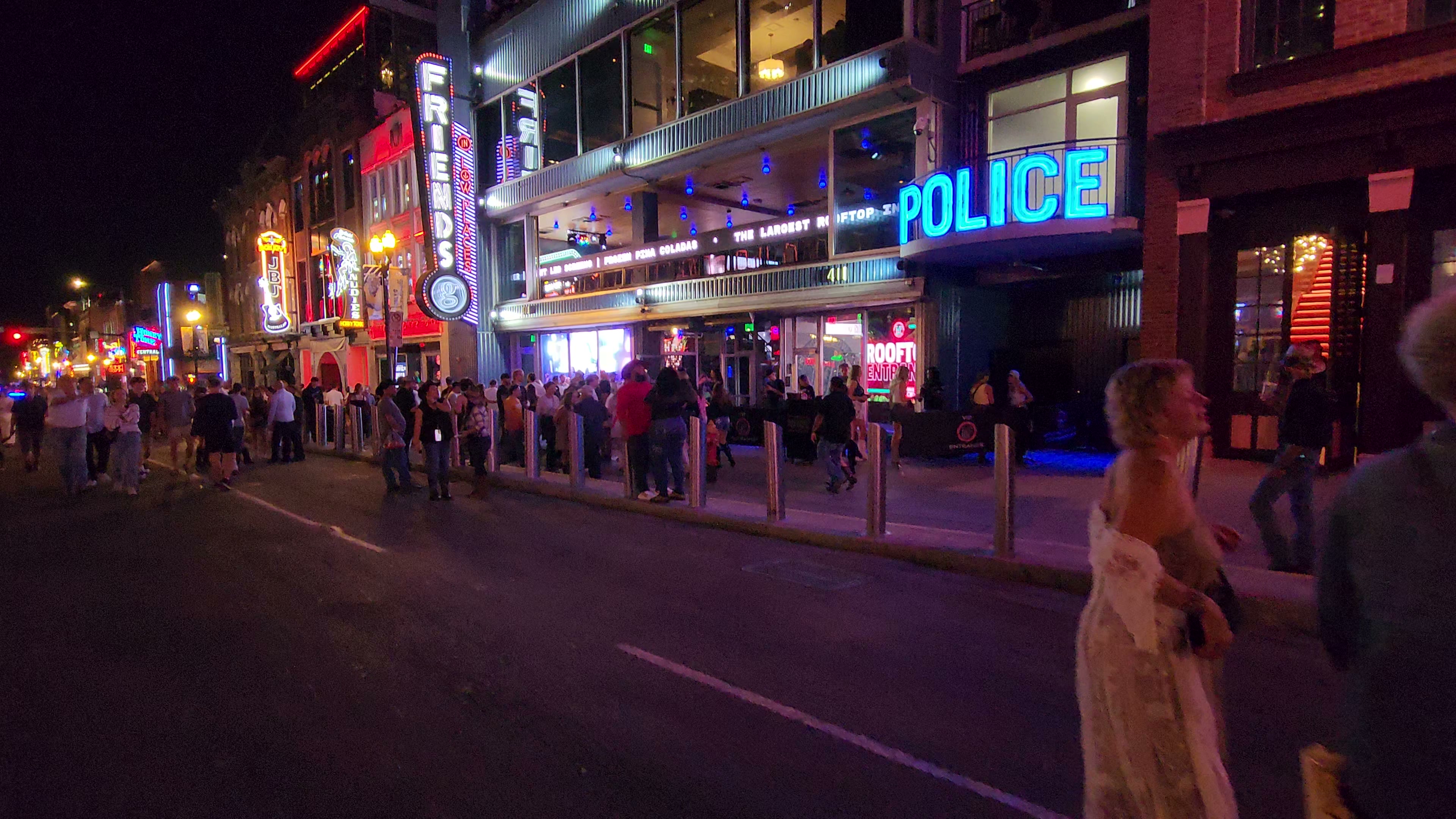
Broadway is built around live music and nightlife, and alcohol is a major part of the environment. The later the night gets, the more likely you are to encounter people whose judgment, balance or behavior has changed.
Give unpredictable people space. Do not turn a minor bump or misunderstanding into a confrontation. Watch your drink and do not accept an unattended one. Pace yourself enough to make decisions about walking, transportation and your group.
If your goal is seeing Broadway with less late-night intensity, daytime and nighttime offer very different experiences. Going earlier is a practical choice, not a failure to experience the district.
Plan How You Are Leaving
Do not wait until the end of the night to decide how to get back.
If you drove, remember exactly where you parked and understand the route back to the garage or lot. My Broadway parking guide recommends choosing a sensible garage and accepting a walk instead of making the entire plan depend on the closest possible space.
Waymo, Uber and Lyft can remove the need to deal with parking, but availability, pricing, pickup rules and wait times vary by service and current conditions. Check each service directly. Choose a clear pickup location and make sure everyone in the group knows the plan.
Do not get into a vehicle unless its identifying information matches what your app provides. If circumstances around a pickup feel unsafe or confusing, move to a more active location and reassess.
First-Time Visitors Should Learn the Street Earlier
If possible, see Broadway during daylight or early evening before navigating it late at night. You will understand the blocks, landmarks, river direction and location of your transportation point without learning everything inside a dense midnight crowd.
The first four hours on Broadway plan begins with walking and orientation for exactly that reason. Familiarity does not remove risk, but it reduces unnecessary confusion.
Check Current Sidewalk Conditions
The On Broadway live feeds let you see current street conditions before heading downtown. They can show crowd density, weather and general activity, but a camera view cannot certify safety.
Streetwalkin' gives a closer sense of how the sidewalks, crossings and nightlife crowd actually feel:
Use those resources to set expectations, then rely on current official information and your own judgment once you are there.
The Practical Answer
Broadway Nashville is a busy, heavily traveled entertainment district at night, and many visitors walk its core blocks. That does not make it risk-free. Stay in active areas, pay attention at crossings, protect your belongings, keep your group together, avoid unnecessary confrontations and decide how you are leaving before the night gets late. Check current conditions and official guidance rather than treating any general safety answer as a guarantee.