Broadway does not suddenly become “busy” at one specific time.
It builds.
I spend a lot of time watching Lower Broadway, both from the live cam and at street level, and one of the most noticeable things is how much the same few blocks change over the course of a day. Morning Broadway, afternoon Broadway and Saturday-night Broadway can feel like three completely different places.
If you want the shortest answer, the biggest change usually starts in the late afternoon and early evening, with Friday and Saturday nights becoming substantially busier after dark.
But that leaves out a lot.
And if your real question is, “How early can I start the Broadway experience?” the answer is basically: as early as you need it to.
Some establishments have drinks flowing and live music going by 10 a.m. Broadway does not require you to wait for sunset before participating.
Here is how I usually see the day unfold.
Check Lower Broadway Live Right Now
Before getting into the timeline, there is an easier way to answer the question for the exact day you are visiting:
Look at Broadway.
Watch the Lower Broadway live cam.
I stream Lower Broadway continuously, so you can check the sidewalks, traffic and general crowd level before you leave your hotel, get in the car or start walking downtown.
That is especially useful because Broadway does not operate on a perfectly predictable schedule. A normal Wednesday afternoon is different from a Saturday afternoon. A concert at Bridgestone Arena can change the sidewalks. A major event, holiday weekend or convention can make downtown much busier much earlier than usual.
The live cam removes most of the guesswork.
You can also check it from anywhere before your trip. If you are wondering what Broadway looks like at 11 a.m., 5 p.m. or midnight, pull it up at that time and take a look.
Morning: Sightseers and Day Drinkers
Morning is when Lower Broadway feels the least like the Broadway most visitors have in their heads, but that does not mean nothing is happening.
The neon is still there. The honky tonks are still there. The sidewalks are usually much easier to navigate, deliveries and cleaning crews are more noticeable, and you can actually stop and look at the buildings without being carried along by a river of people.
This is one of my favorite times to actually see Broadway.
If your goal is sightseeing, taking pictures, getting your bearings or figuring out where things are, morning is hard to beat.
But Broadway also has a second morning constituency:
day drinkers.
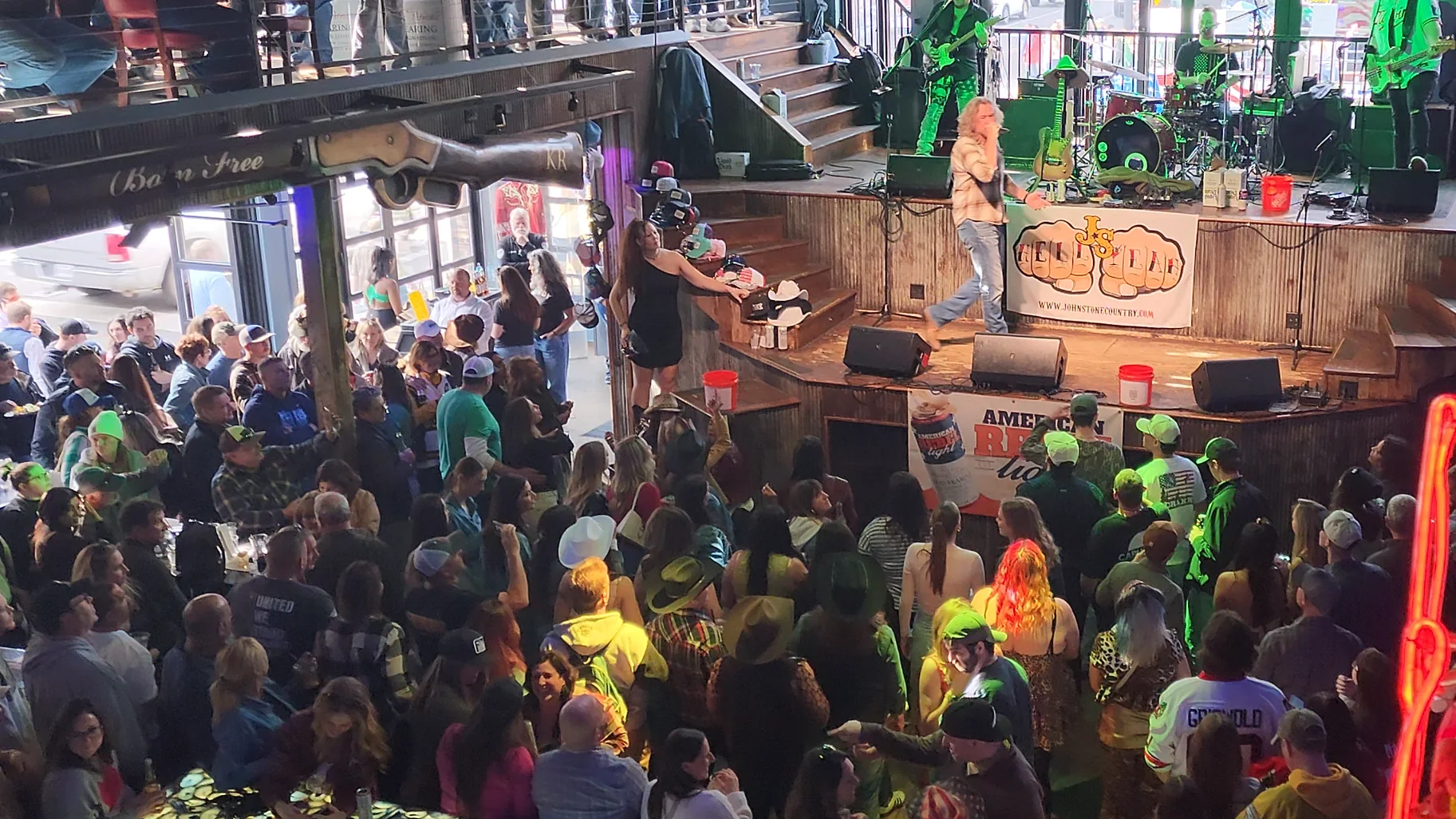
Some places start serving drinks and putting live music onstage as early as 10 a.m. So while one group is photographing the Ryman, looking at signs and figuring out where Fifth Avenue is, another group may already be several songs and a couple of drinks into its Nashville experience.
The party does not necessarily start at night here.
It starts whenever you decide your Broadway day starts.
There may already be plenty of visitors walking around, particularly on weekends and during busy travel periods, but this is still generally the calmest and easiest part of the day to move around.
It is also a good reminder that Lower Broadway is not just a nighttime district. The street starts waking up long before the nighttime crowds arrive.
Late Morning and Early Afternoon: Broadway Wakes Up
By late morning and around lunchtime, the street starts looking much more like a visitor district.
More people are walking between restaurants, attractions and bars. Live music becomes increasingly easy to find. Tour groups become more noticeable. Rooftops start filling in. The day-drinking contingent gets considerably less lonely.
But this is still usually a very manageable version of Broadway.
If somebody told me they wanted to experience the honky tonks without dealing with the thickest crowds of the night, this is one of the windows I would point them toward.
You can walk. You can stop. You can change direction without negotiating with 400 people coming the other way.
That sounds like an absurdly low bar for tourism, but anyone who has tried crossing Lower Broadway at 10:30 on a packed Saturday night understands.
The daytime crowd also generally feels different from the crowd that takes over later.
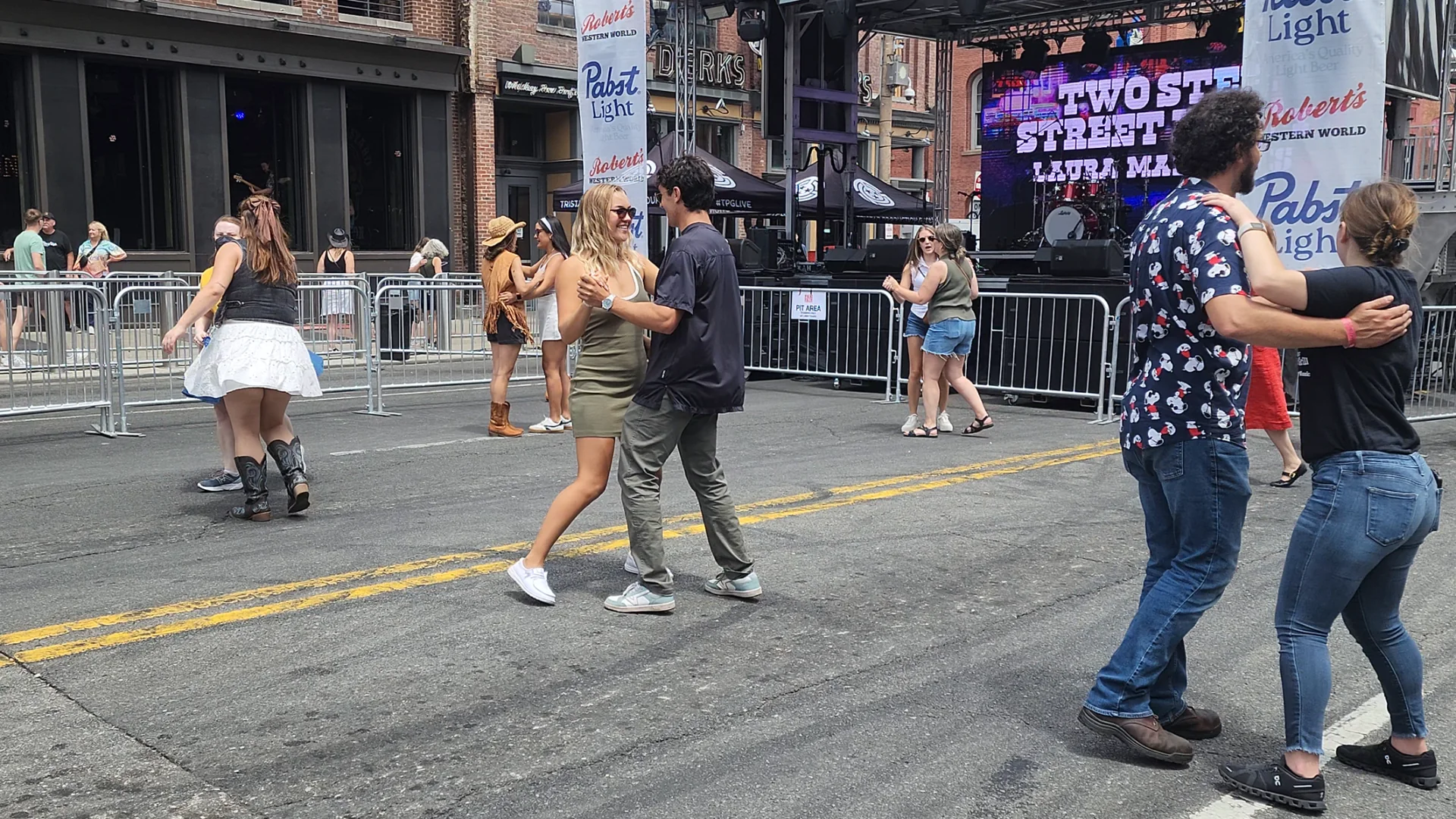
From what I see, it tends to skew a little older and includes more families, couples sightseeing, convention visitors, daytime drinkers and people treating Broadway as one stop in a larger day downtown.
There are still groups drinking, singing along and making a full event out of it. This is Broadway, after all. But the overall atmosphere usually feels more like Nashville tourism with a party running through it than the much more concentrated nightlife crowd that arrives later.
Afternoon: Busy, But Usually Not Packed
Afternoon is where Broadway begins transitioning.
By this point the street normally feels active. Bars are open, live music is everywhere, visitors are moving between attractions, and the sidewalks have noticeably more life than they did in the morning.
The people who started drinking at 10 a.m. have also had some time to establish momentum.
But there is a big difference between active and packed.
That difference matters.
An afternoon crowd can make Broadway feel lively without making it difficult to move around. For a lot of visitors, that is actually the sweet spot.
It is also why I would not automatically tell someone that Broadway is “better” at night. Better depends on what you want.
If you want neon, nightlife and maximum people-watching, come later.
If you want live music, drinks and atmosphere while still being able to explore comfortably, afternoon Broadway has a lot going for it.
You absolutely do not have to wait until nighttime to start having the Broadway experience.
Late Afternoon and Early Evening: The Changing of the Guard
This is where I usually start noticing the real change, and it is not just the number of people on the sidewalk.
Late afternoon into early evening often feels like a changing of the guard.
Some of the older visitors, families and daytime sightseers are starting to wrap up their time on Broadway just as the younger and more party-focused crowd begins arriving.
The day drinkers are still there, of course. Some of them are simply graduating into night drinkers.
But around them, the composition of the street begins shifting.
People who spent the day sightseeing start heading toward dinner, hotels or other parts of downtown while groups coming downtown specifically for the night begin flowing in the opposite direction.
For a while, the two crowds overlap.
That overlap is one of the more interesting times to watch Broadway. The daytime version of the street has not completely disappeared, but the nightlife version is rapidly taking over.
Dinner crowds arrive. Concert and event traffic can begin feeding into downtown. Pedal taverns, party vehicles and larger groups become more noticeable.
The sidewalks start filling.
The light changes.
The neon starts mattering.
Broadway begins turning from a daytime entertainment district into the version people picture when they hear “Nashville nightlife.”
On a normal weekday, that transition can remain fairly gradual.
On Friday and Saturday, it can happen much faster.
By early evening on a busy weekend, I am no longer thinking, “Broadway is starting to get busy.”
I am thinking, “Here we go.”
After Dark: This Is the Broadway Most People Picture
By the time darkness settles in, that changing of the guard is mostly complete.
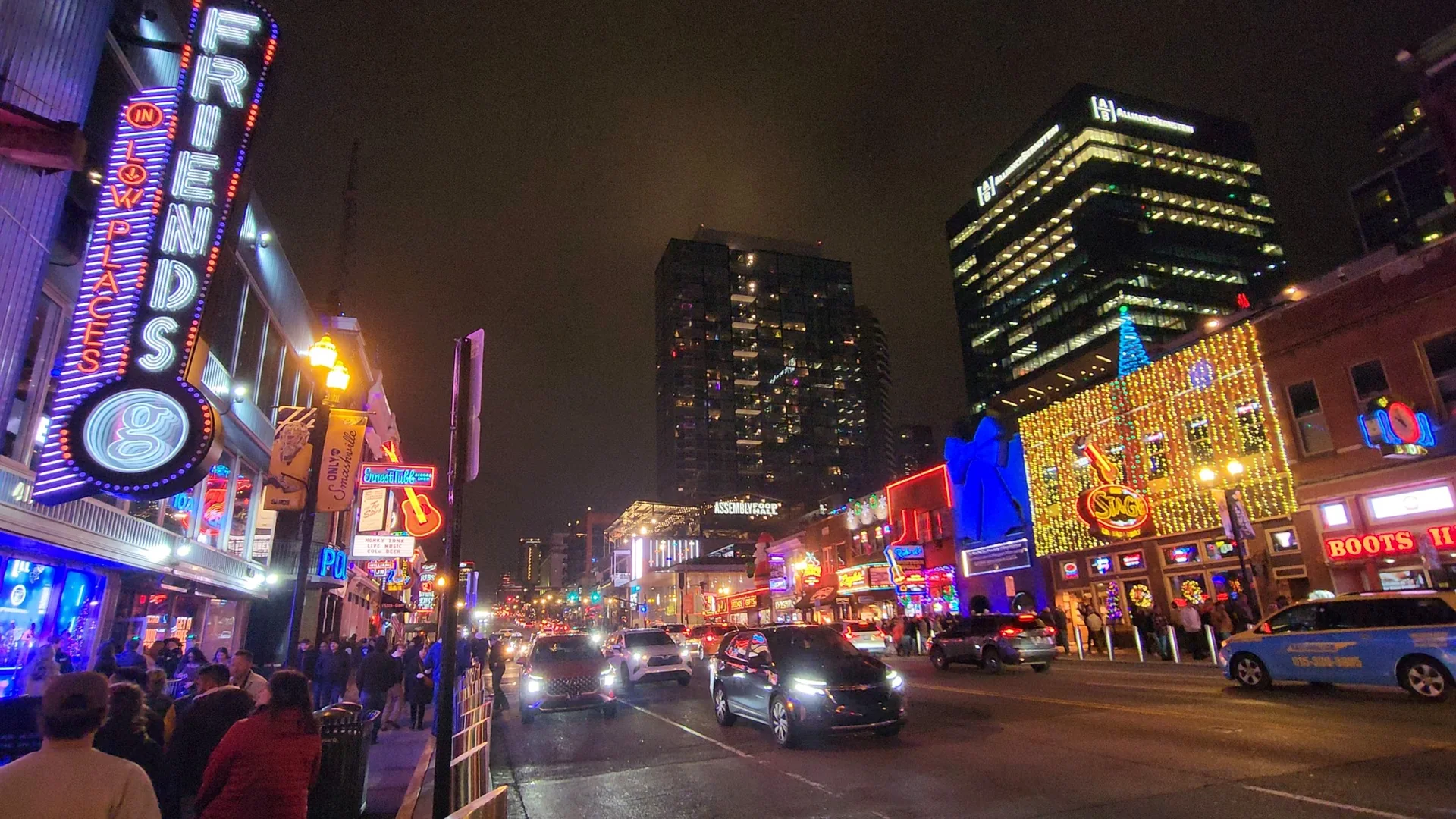
The crowd generally feels younger, louder and much more focused on bars, drinking, music and the nightlife experience than the crowd I see earlier in the day.
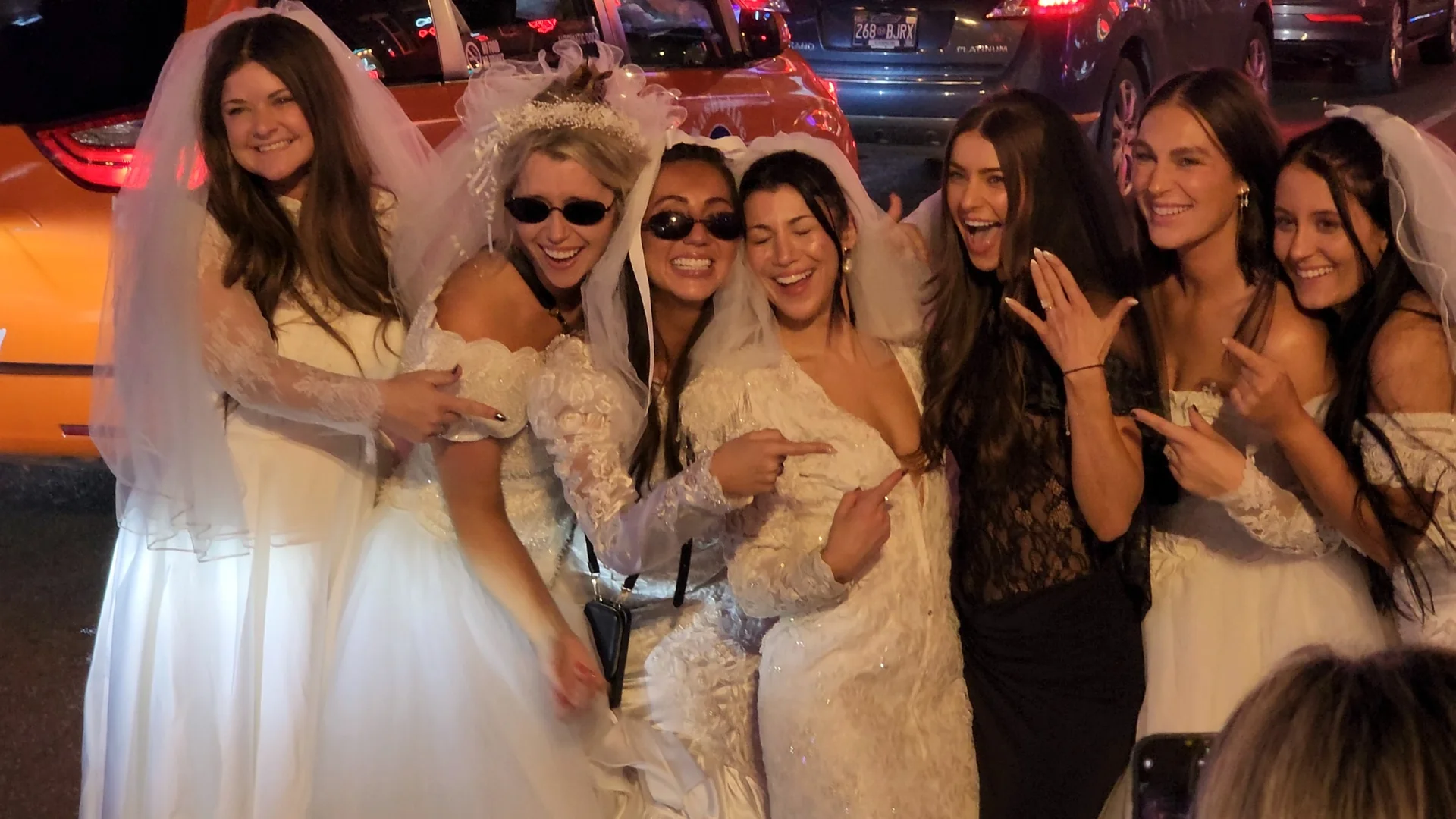
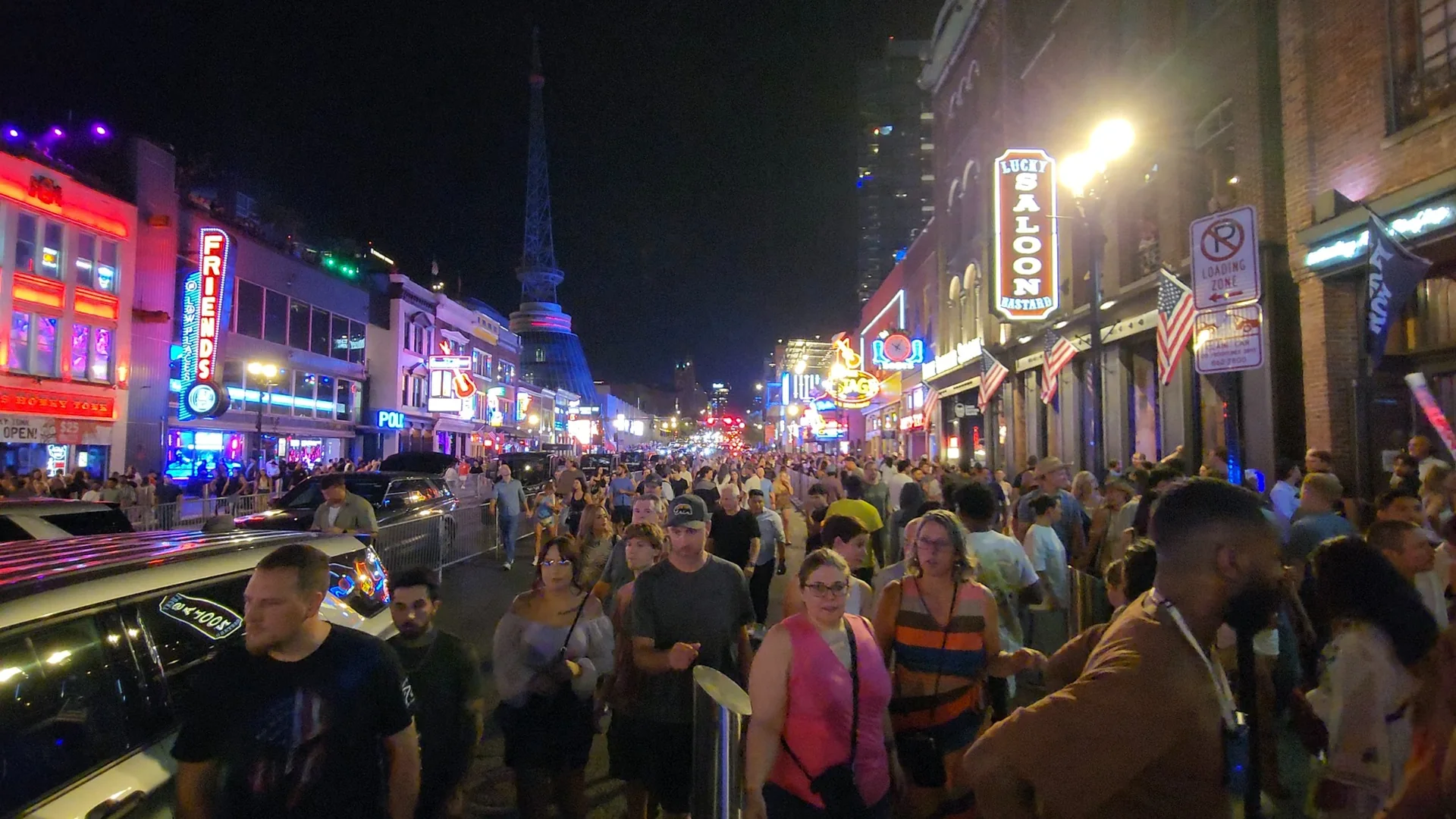
The signs and rooftop lighting take over. Bands are visible in windows. Party buses and pedal taverns cycle through. Lines start forming outside popular venues. The sidewalks become increasingly dominated by groups moving from bar to bar.
This is also when the people-watching gets much better.
Friday and Saturday nights are the obvious heavyweights, but even weeknights can get surprisingly active depending on the season and what else is happening downtown.
If you are visiting Broadway specifically because you want the famous Nashville nightlife experience, after dark is when you want to see it.
If you are visiting because you want to calmly inspect architecture and read historical markers, this is perhaps not humanity operating at its most cooperative.
Roughly 8 PM to 10 PM: Broadway Is Fully Alive
On a typical weekend night, this is when the street usually feels fully engaged.
The sidewalks are busy. Honky tonks are active. Rooftops are filling. Lines become more common. Groups that started elsewhere downtown begin converging on Broadway.
You can still move around, but the pace changes.
At this point you are not simply walking through Broadway.
You are walking with Broadway.
That distinction becomes increasingly obvious as the night continues.
This is also a good time to check the live cam if you are still deciding whether to head downtown. You can immediately see whether the street looks comfortable, busy or completely slammed.
10 PM to Midnight: Usually the Main Event
If you want the version of Broadway filled with neon, music, packed sidewalks, lines, party vehicles and people very enthusiastically experiencing Nashville, this is generally the window I would target on Friday or Saturday night.
By this point the daytime visitors have mostly given way to nightlife crowds.
The sidewalks can become dense enough that walking a couple of blocks takes substantially longer than it did earlier in the day.
This is also the environment I record most often in Streetwalkin’.
The live cam gives you the view from above.
Streetwalkin’ puts you directly on the sidewalk.
If you are trying to understand what a busy Broadway night actually feels like before your trip, that combination gives you a much better answer than a crowd estimate ever will.
After Midnight: Still Very Much Alive
Midnight does not mean Broadway suddenly winds down.
On busy nights, there is still a lot happening.
People continue moving between bars. Groups leave concerts and events. Lines can remain long. The character of the crowd changes again as the night gets later.
And there is still plenty of night left. Some Broadway bars stay open as late as 3 a.m., so midnight can be closer to the middle of the night than the end of it for people who came downtown specifically to party.
This is generally not the time I would recommend for someone whose primary goal is casually exploring the area for the first time.
It is the time I would recommend if your goal is specifically late-night Broadway.
The difference between those two goals is important.
Weekdays, Weekends and Seasons
The timeline above is a useful general pattern, not a schedule carved into a wall somewhere beneath the Ryman.
Day of the week matters.
Broadway is naturally busier on weekends than it is during the week. Friday and Saturday usually build earlier, become denser and remain busy longer. Saturday is especially likely to give you the full version of Lower Broadway: thicker sidewalks, longer lines, more party vehicles and a much larger nightlife crowd.
Weekdays can still be lively, particularly when the weather is good or something major is happening downtown, but there is usually more breathing room. If you want the music and energy without quite as much humanity packed into every available square foot, a weekday can be a very good choice.
The time of year matters too.
In my experience, the biggest sustained crowds generally arrive during the spring and summer travel season. Warmer weather means more visitors, more rooftop traffic, more bachelor and bachelorette groups, more events and simply more people spending long stretches of the day outside downtown.
That does not mean Broadway becomes quiet once summer ends. Fall weekends can still be extremely busy, and major concerts, sporting events, conventions, holidays and special events can overwhelm whatever the normal seasonal pattern would have been.
Winter generally gives you more opportunities to see a lighter version of Broadway, especially during ordinary weekdays, although a busy event weekend can still make that prediction worthless in a hurry.
So there are really three variables working together:
Time of day. Day of the week. Time of year.
And then Nashville adds the wildcard: whatever happens to be going on downtown that day.
That is another reason I keep coming back to the same advice:
Check the live cam.
You do not need to guess what Broadway usually looks like if what you really care about is what Broadway looks like today.
When Should You Go?
If I were breaking it down as simply as possible:
Morning: Best for sightseeing, photographs, getting oriented and anyone who sees no reason to wait until lunch for live music and a drink.
Late morning through afternoon: Best for a lively Broadway experience with easier walking, a somewhat older and more mixed crowd, plenty of music and a healthy day-drinking population.
Late afternoon and early evening: The changing of the guard. Daytime visitors begin leaving as the younger nightlife crowd arrives.
After dark: Best for neon, atmosphere and the classic Broadway nightlife experience.
8 PM to midnight on Friday or Saturday: Best for people-watching and seeing Broadway near full strength.
After midnight: Best if late-night nightlife is specifically what you came for.
There is no universally correct time.
There is only the version of Broadway you want to experience.
And if your preferred version includes live music and a drink at 10 in the morning, Broadway is remarkably accommodating.
Want to See the Difference for Yourself?
One of the reasons I built On Broadway was because questions like this are difficult to answer with static descriptions.
So I keep cameras and videos running.
Want to know how busy Broadway is right now?
Watch the Lower Broadway live cam.
It is there around the clock, so whether you are already downtown or sitting hundreds of miles away planning a trip, you can check Broadway for yourself.
Want to see what a Friday or Saturday night actually feels like from sidewalk level?
Trying to figure out how far things are from each other downtown?
The live cam shows you Broadway now.
Streetwalkin’ shows you Broadway from inside the crowd.
Walking Nashville shows you how downtown actually connects on foot.
Between those three, you can get a surprisingly good feel for Nashville before you ever arrive.
The Practical Answer
So, what time does Broadway Nashville get busy?
The street starts waking up in the morning, and the party can start as early as 10 a.m. Afternoon is active. Early evening is when both the crowd size and the type of crowd begin changing. After dark is when Broadway really starts looking like Broadway. Friday and Saturday are naturally the busiest nights, and spring and summer generally bring the biggest sustained crowds. On a busy weekend, roughly 8 PM through midnight is usually when the street feels closest to full strength.
But do not plan your entire night around a generalized timeline.
Broadway changes too much from one day to another.
Before you head downtown, take ten seconds and look at the street yourself.