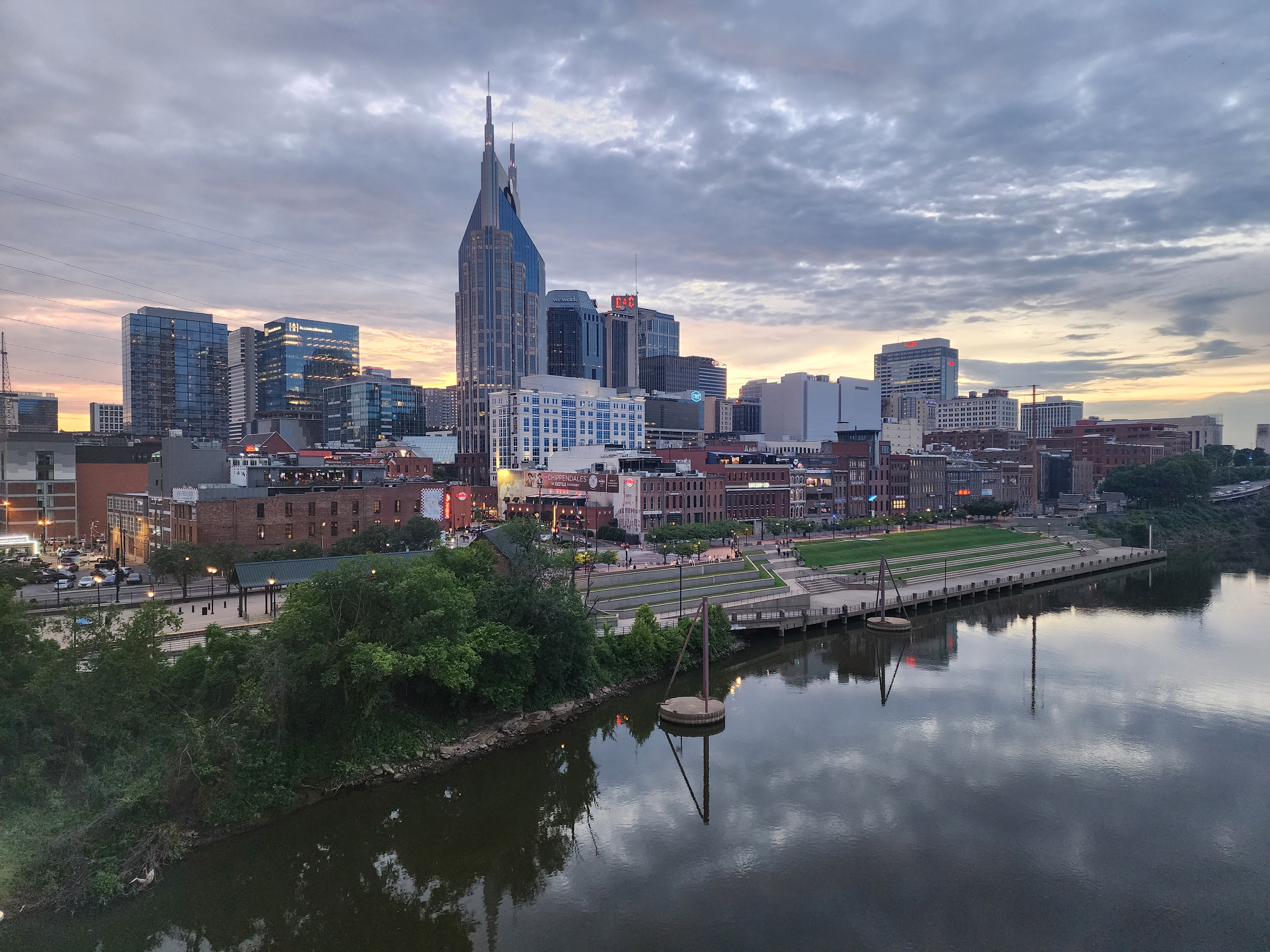
Broadway is Nashville.
Broadway is also absolutely not all of Nashville.
Both statements can be true.
Lower Broadway is one of the city’s defining attractions and I think a first-time visitor should see it.
But if you spend your entire trip between Bridgestone Arena and the Cumberland River, you have seen a spectacular entertainment district.
You have not seen the whole city.
So once you have done the honky-tonks, this is where I would go next depending on what you want.
12South: For a Walkable Neighborhood Day
If Broadway is neon, bands and giant entertainment venues, 12South is a much smaller neighborhood experience.
The main commercial stretch runs along 12th Avenue South and is extremely walkable.
Restaurants.
Coffee.
Bakeries.
Boutiques.
Local and national retail.
Murals.
Patios.
This is where I would go when somebody says:
“I still want somewhere lively, but I would like to stop yelling over a drummer.”
12South works particularly well during the day.
Eat.
Shop.
Walk.
Get coffee.
Remember that Nashville residents occasionally experience daylight voluntarily.
East Nashville: For Restaurants, Bars and Live Music That Feel Less Tourist-Centered
East Nashville is not one single strip.
It is a collection of neighborhoods and commercial pockets east of the river.
The area is known for restaurants, dive bars, cocktails, live music, art and vintage shopping.
If you enjoyed Broadway’s energy but want to see how Nashville nightlife behaves without a wall of celebrity-branded honky-tonks, East Nashville is one of the easiest answers.
The Basement East is also here and regularly books touring acts across rock, indie, Americana and other genres.
You will probably want a car or app-based ride depending on exactly where you are going.
Waymo, Uber and Lyft can all be useful, subject to current service availability.
Germantown: For Food, History and a Slower Urban Day
Germantown sits just northwest of downtown.
It is walkable once you are there and gives you several different Nashville experiences in one area.
Restaurants.
Nashville Farmers’ Market.
Tennessee State Museum.
Bicentennial Capitol Mall State Park.
First Horizon Park and baseball.
Historic streets.
This is where I would go when somebody wants a Nashville day that still feels urban without revolving around nightlife.
The State Museum and Bicentennial Mall also make Germantown especially useful if you want history without buying another downtown entertainment ticket.
Centennial Park and The Parthenon: For Something Completely Different
Nashville built a full-scale replica of the Parthenon.
Because apparently moderation was unavailable in 1897.
It sits inside Centennial Park west of downtown.
The park itself is free to walk.
The Parthenon museum requires admission if you go inside.
This is one of the best choices when you want a break from bars, restaurants and shopping.
Walk around the lake.
See the building.
Go inside if ancient-Greece-via-Tennessee appeals to you.
Then continue into Midtown if you want food or drinks afterward.
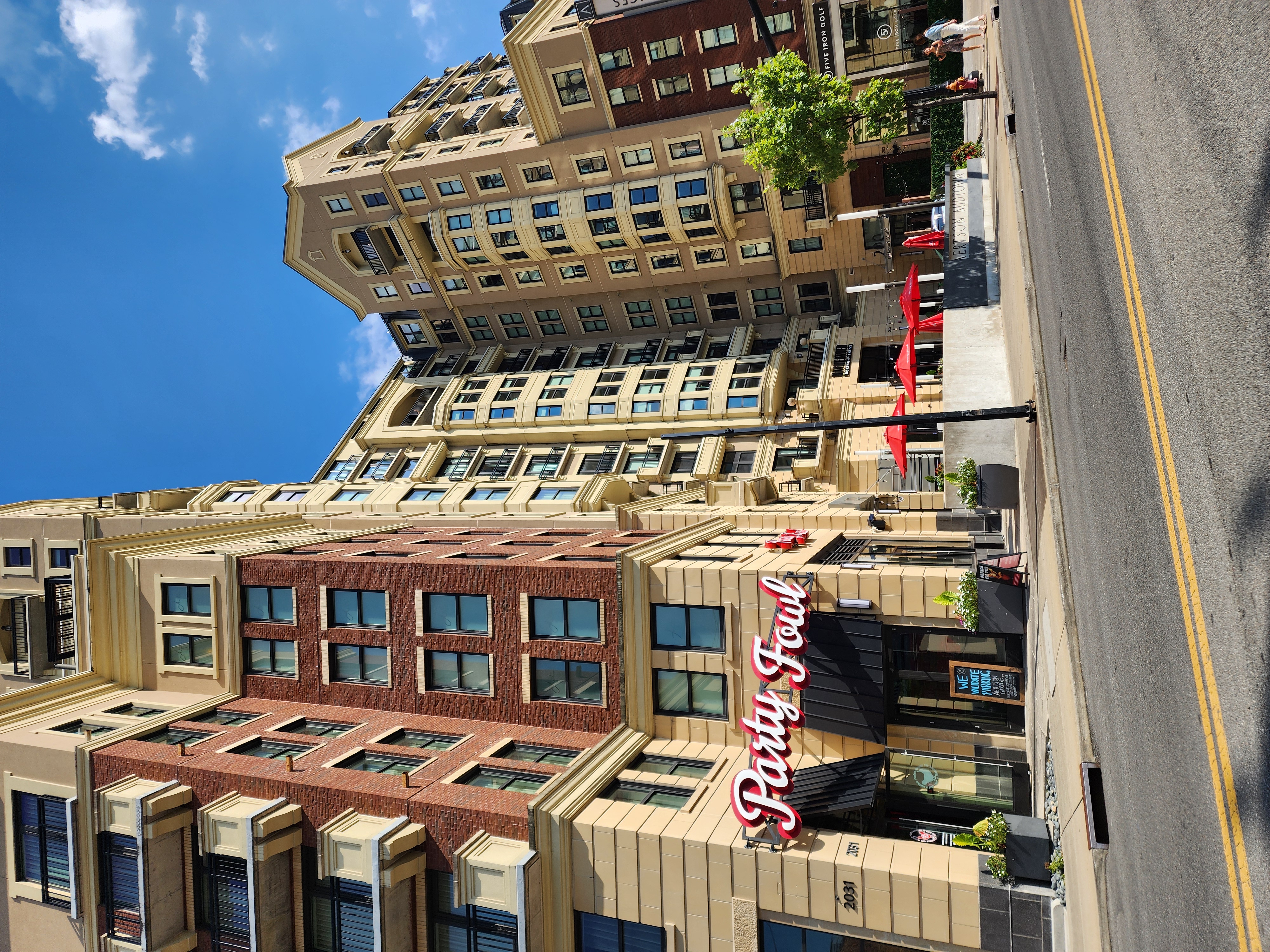
The Gulch: For a Polished Urban Neighborhood Close to Downtown
The Gulch is immediately southwest of downtown.
High-rises.
Restaurants.
Hotels.
Shopping.
Murals.
Breweries.
Live music.
Station Inn.
The neighborhood is close enough that it can easily become part of a downtown day rather than a separate excursion.
If your group likes polished urban districts, brunch, shopping and photos, The Gulch is easy.
If your group specifically cares about bluegrass, Station Inn gives you a music reason to go that has nothing to do with Broadway.
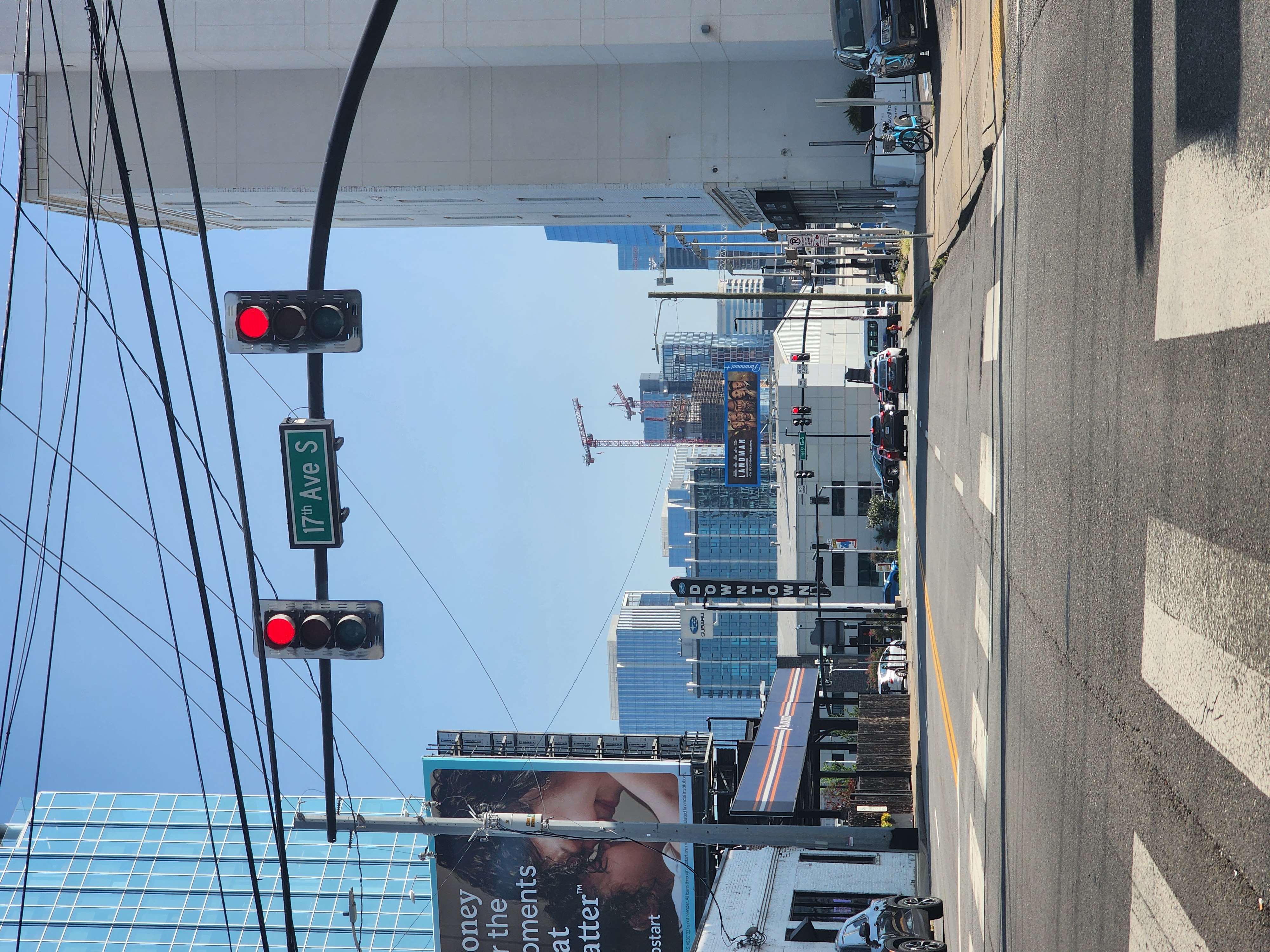
Music Row and Demonbreun: For Nashville’s Music-Business Side
Music Row is where the machinery behind Nashville music becomes visible.
Studios.
Publishing.
Labels.
Music-business history.
The area is not a Broadway-style tourist strip, and that is precisely why it matters.
Music City did not become Music City because tourists eventually bought giant margaritas on rooftops.
Songs were written, recorded, published and promoted here.
If you care about the industry behind the entertainment, Music Row belongs in the trip.
The nearby Demonbreun area gives you restaurants and bars if the group also requires immediate refreshments after learning something.
Opryland and Music Valley: For the Grand Ole Opry
The Grand Ole Opry is not downtown.
This catches first-time visitors who imagine every famous Nashville music institution sits within three blocks of Broadway.
It does not.
The Opry is in the Opryland/Music Valley area east of downtown.
Gaylord Opryland is there too, along with other attractions and restaurants.
If an Opry show is important to you, treat this as its own part of the trip.
Do not schedule dinner on Broadway fifteen minutes before showtime and then discover Nashville has traffic.
Wedgewood-Houston: For Art and Creative Nashville
Wedgewood-Houston, usually shortened to WeHo, has developed into one of Nashville’s creative districts.
Galleries.
Studios.
Restaurants.
Bars.
Creative businesses.
This is a good choice for visitors who want something less tourist-oriented and more connected to the city’s art/design community.
It is also another reminder that Nashville’s creative identity extends well beyond country-music tourism.
Green Hills: For the Bluebird Cafe
If the Bluebird Cafe is on your Nashville list, you are going to Green Hills.
The tiny songwriter venue is famous for intimate performances and has absolutely nothing in common visually with a Broadway mega-bar.
That contrast is the point.
Tickets and access require planning, so this is not a spontaneous “we’ll wander in after dinner” stop.
But for serious songwriters and music fans, the Bluebird can be more meaningful than any giant downtown venue.
Which Neighborhood Should You Choose?
If you want walkable shopping + food:
12South.
If you want restaurants, bars and creative nightlife:
East Nashville.
If you want history + food + parks:
Germantown.
If you want green space + The Parthenon:
Midtown/Centennial Park.
If you want polished urban Nashville close to downtown:
The Gulch.
If you want music-business history:
Music Row.
If you want the Grand Ole Opry:
Opryland/Music Valley.
If you want arts/creative Nashville:
Wedgewood-Houston.
If you want intimate songwriter culture:
Green Hills and the Bluebird.
Do You Need a Car?
Not necessarily, but Broadway-style walking stops working once you begin hopping between neighborhoods.
12South, East Nashville, Opryland and Green Hills are not all sitting conveniently beside each other.
Waymo, Uber and Lyft may all be practical depending on current coverage and availability.
A rental car becomes more useful if your itinerary expands farther from the core or you plan multiple neighborhood stops in one day.
The mistake is assuming that because downtown Nashville is walkable, Nashville is walkable.
It is not.
The Practical Answer
See Broadway.
I mean that.
It is worth seeing.
Then leave it.
Go to a neighborhood.
Walk somewhere that does not have six rooftop bars stacked above you.
Eat somewhere that is not trying to keep you inside for the next four hours.
Hear music in another kind of room.
Nashville gets much more interesting once Broadway becomes one piece of the trip instead of the entire definition of the city.