There is no month when Broadway suddenly becomes Broadway.
The music plays year-round.
The bars operate year-round.
The neon has shown admirable resistance to seasonal depression.
What changes is everything around it:
weather,
crowds,
events,
daylight,
hotel demand,
and how much you enjoy standing outside.
If I had to pick for most people, I would favor spring or fall.
If I wanted maximum Broadway energy, summer is hard to beat.
If I wanted holiday atmosphere or potentially calmer periods, winter becomes interesting.
Spring: My Best Overall Balance
This spring Streetwalkin' episode gives a useful warm-weather contrast without pretending one afternoon represents an entire season.
Spring is probably my favorite all-around answer.
Nashville wakes back up outdoors.
Days get longer.
Rooftops become more attractive.
Walking downtown is generally more pleasant than the middle of summer.
The catch:
Spring weather can be volatile.
Rain happens.
Storms happen.
A beautiful afternoon can abruptly become a weather app notification.
Do not pack as though Nashville signed a sunshine guarantee.
Spring Crowds
Spring is not a secret.
Once weather improves, visitor traffic builds.
Major events and convention weekends can make downtown very busy.
But outside the biggest event periods, spring can give you strong Broadway energy without the full heat punishment of midsummer.
That is a good trade.
Summer: Maximum Nashville, Maximum Heat
Summer is Broadway with the volume turned up.
Long days.
Outdoor events.
Huge tourism periods.
Rooftops.
Concerts.
Sports.
Festival crowds.
That is the upside.
The downside is Tennessee summer.
Heat.
Humidity.
Sweat.
The moment when a thoughtful outfit becomes a fabric-based personal grievance.
If you love big crowds and full-energy nightlife, summer delivers.
If you wilt at 90 degrees, perhaps choose another season.
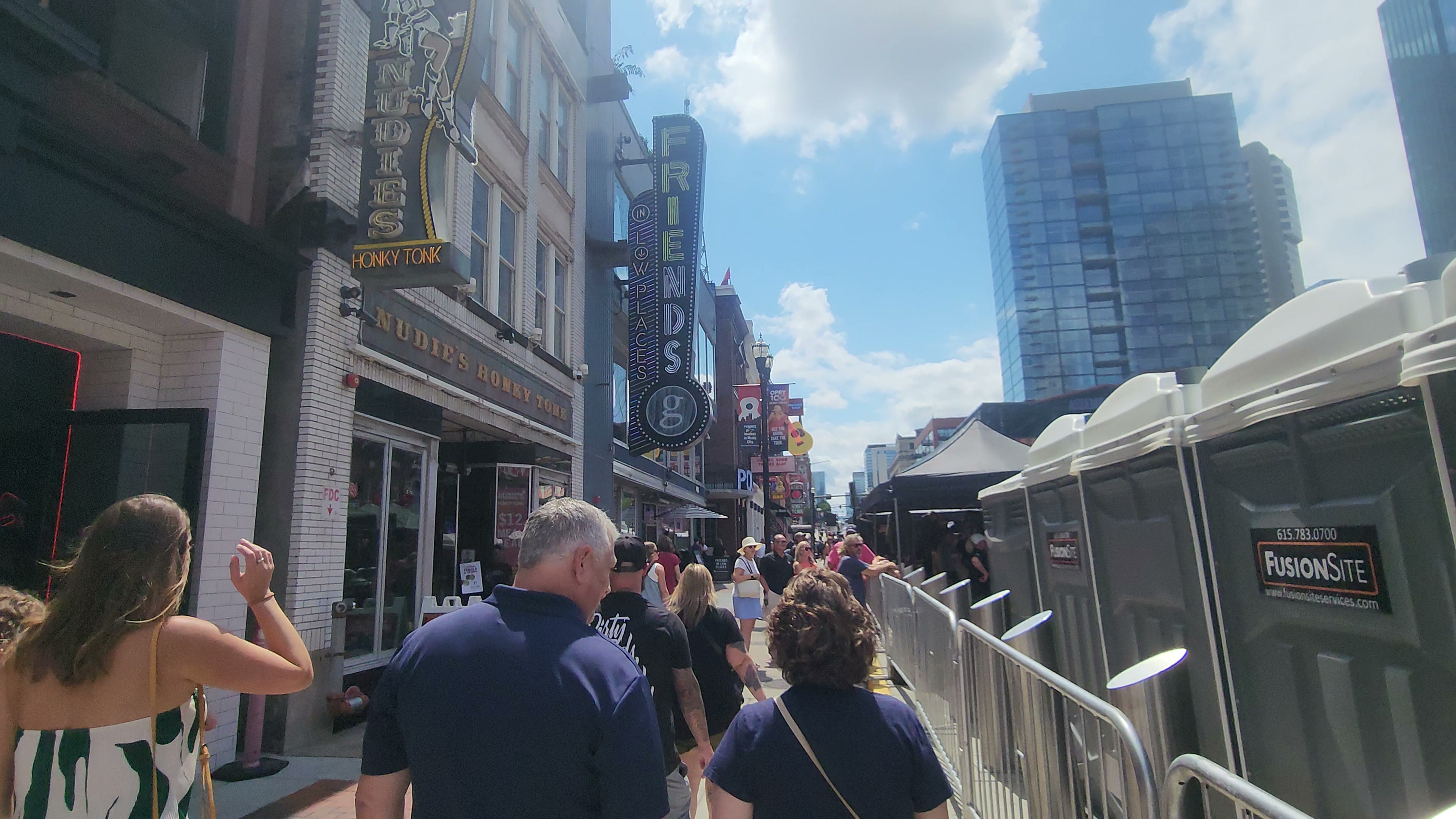
Summer Events Can Dominate Downtown
Major summer events can completely change hotel rates, parking, crowd size, road closures, restaurant availability and rooftop capacity.
If your trip overlaps something enormous, that may be exactly what you want.
Or absolutely not.
Check the Nashville event calendar before booking.
Fall: Excellent Weather and Strong Energy
Fall is the other season I would recommend broadly.
Temperatures become more comfortable.
Walking downtown gets easier.
Outdoor spaces remain usable.
Football adds another layer of weekend activity.
Nashville remains busy without requiring the same level of heat tolerance as July.
If somebody told me:
“I want Broadway at night, walking during the day and I do not want my clothes fused to my body,”
fall is compelling.
Fall Is Not Automatically Quiet
Football.
Concerts.
Conventions.
Fall events.
Holiday weekends.
Comfortable weather encourages people to actually go outside.
Do not interpret fall as empty Nashville.
Quiet is relative.
Winter: Underrated Outside the Biggest Holidays
Winter changes Broadway more than people expect.
The street still operates.
Music still plays.
But outdoor comfort becomes less predictable.
Cold snaps happen.
Occasional snow and ice happen.
Rooftops can become much less appealing depending on conditions.
At the same time, the holiday season gives downtown an entirely different visual character.
Later in winter, outside major weekends, you may find periods that feel easier than peak warm-weather Nashville.
Snow on Broadway Is Weirdly Great
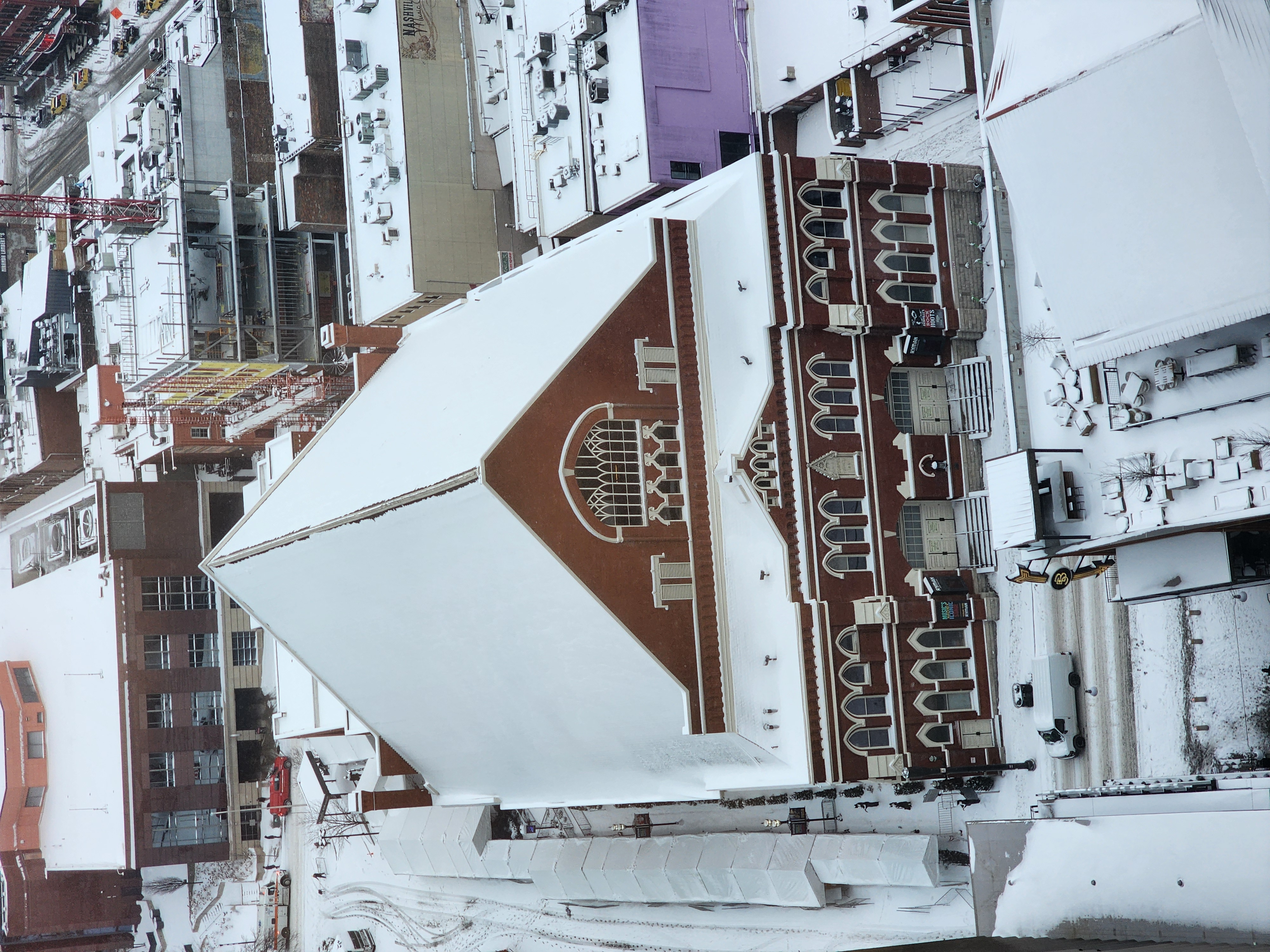
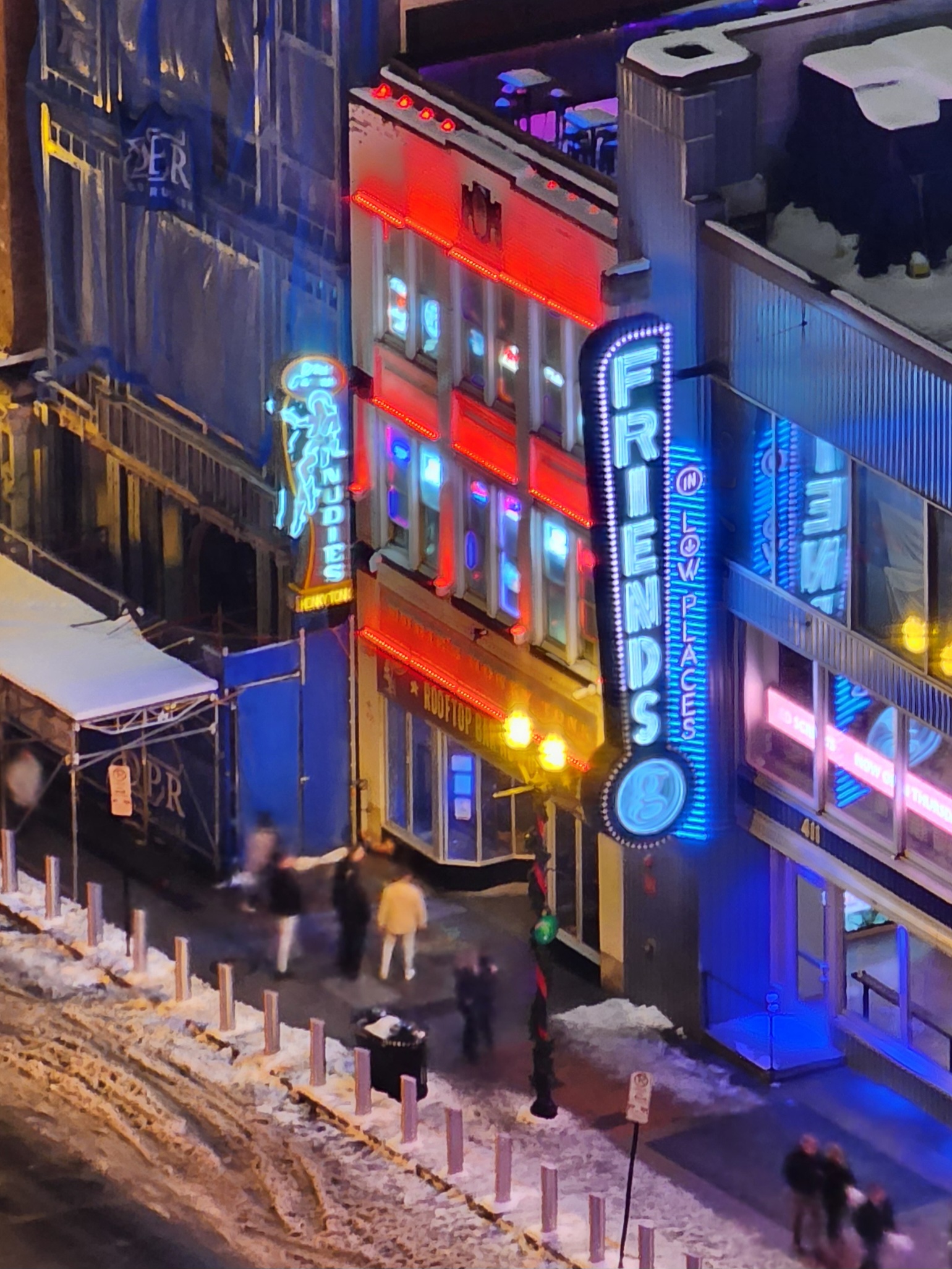
Nashville does not become a snow city.
That is why snow downtown looks so unusual when it happens.
You should not plan a trip expecting this.
You can plan a trip knowing winter Nashville occasionally produces a completely different Broadway.
Christmas and New Year’s
Treat major holidays as events, not normal winter.
Holiday decorations can make downtown gorgeous.
New Year’s and other major celebration periods can bring giant crowds and event logistics.
If your goal in choosing winter was avoiding people, check the calendar before congratulating yourself.
Which Season Is Cheapest?
I would not promise a season.
Hotel pricing responds to demand.
A supposedly cheaper month can contain a huge convention, concert weekend or event.
Search your actual dates.
Season gives you a general pattern.
The calendar gives you the bill.
Which Season Is Best for Rooftops?
Spring and fall for comfort.
Summer for maximum activity.
Winter only when weather cooperates.
If a particular rooftop is central to your plan, check the venue when weather is questionable.
Which Season Is Best for Walking?
Spring and fall.
Nashville is walkable downtown year-round, but there is a difference between:
“I can walk this,”
and
“I enjoy walking this.”
Weather decides a lot.
Rain
Rain is not a reason to cancel Broadway.
Most of the actual honky-tonk experience is indoors.
Rooftops and sidewalk movement are another story.
Broadway Nashville in the Rain: Is It Still Worth Going?
My Seasonal Ranking
For best overall balance:
Spring.
For comfortable weather + nightlife:
Fall.
For maximum energy and events:
Summer.
For holiday atmosphere or potentially easier off-peak periods:
Winter.
But none of those answers overrides your actual dates.
The Practical Answer
Broadway works every season.
Choose based on what bothers you more:
Heat?
Cold?
Crowds?
Rain?
Prices?
If you want the safest general recommendation, choose spring or fall.
If you want the biggest version of Nashville, choose summer.
If you enjoy holiday atmosphere or do not mind cold-weather uncertainty, winter can be excellent.
Then check the event calendar.
The season tells you the climate.
The specific weekend tells you Nashville.